Friday, September 23, 2016

Hurricane Earl

This past August, Moonracer Farm endured its second hurricane since we moved there in the beginning of 2007.  In October of 2010, Hurricane Richard wreaked havoc on the Cayo District and other parts of Belize, and in August 2016, Hurricane Earl added his impact.

Wet hens!
Both went over us as Category 1 storms.  While Richard did more damage to the rest of Belize, Earl seemed to do more damage to the Cayo District, although we were incredibly fortunate in that while we had a lot of downed trees and limbs, we did not have any damage to property.  The horses and chickens were cold and wet and annoyed the morning after Earl passed us, but by midday they had dried off and warmed up and seemed to be pretty much back to normal.


We spent a lot of time cleaning up over the next few weeks, and it is going to take years for the jungle around us to fully recover, but overall we won't have any long term effects.  Not everybody was so lucky, and the floods after the hurricane did more damage than the hurricane itself to those in low lying areas such as San Ignacio, which was flooded over the market and into the park in the days following the storm.  It makes us glad to be hill dwellers!

We had a lot of warning that the we were potentially
in the storm's track.
The horses all had to wear halters with tags with our
name and number written on them with a Sharpie.  
We feel fortunate to be living in a hurricane zone in this day and age where weather can be predicted days if not weeks in advance.  Everybody knew Earl was on his way a good three or four days ahead of time, and while you always hope you're not in the bull's eye, you need to get ready as though you will be, and that's what we did.  We stowed anything that could blow around, we put halters with name tags and our phone number on the horses, we parked the vehicles in protected spots, we made sure anything breakable in our open kitchen (including our glass tabletop) was stored in a safe place, we took the solar panels off the roof, moved things away from the walls in our house, and did what seemed to turn into a never ending list of things to reduce damage if we got hit.

In the afternoon, we were hopeful that it was
changing direction and would pass north of us.


Because we have internet, we spent the afternoon before Earl hit keeping the village council up to date on what the storm was doing so they could get people to hurricane shelters if necessary, and make sure the village was as battened down as possible.  They stopped by in the early evening, and we made sure we had everybody's phone numbers so we could keep them posted as long as we had internet and phones.  Then, we ate dinner, and went in our closed up house to wait for the winds to start.


Right before we went to bed, Earl was just off the coast of Belize.

We went to bed around 10:15, and it was just starting to get windy.  The storm was still a ways off the coast.  We actually slept, until around 4AM, when it sounded like a train was going by and everything was crashing and banging.


When we woke up to lots of noise a little after 4AM,
we found that Earl came much closer to us than had been
 predicted earlier in the day.
It sounded like a hurricane was going overhead, which we found out it was when we got on line and against all odds found that we still had internet and could see exactly where the storm was.  It wasn't right overhead, but it was close enough that we had hurricane force winds twisting the tops out of trees.  We messaged with a few friends who were doing the same thing we were, and waited for it to get light.


The view from our door when we first went outside.
 It's too bad we can't display the smell of lots of freshly broken wood.
At first light, we went outside and found that despite all the trees and leaves and branches, everything was basically okay.


A near miss for the satellite dish!
The satellite had taken a near miss, but continued to work throughout the storm.


The kitchen was a wet mess, but no damage.
It needed a deep cleaning anyway.  ;)
My kitchen was soaking wet and it was still blowing, but I used my body to shield the burner from the wind and made a pot of coffee to take to our guest, and to make sure she had made it through the night.  She had done basically the same thing as we did, sleeping until it got really loud around 4AM.


Leaf litter was plastered to everything.  Leaves had just been shredded.
Around 7AM, a crew of guys from the village, including the village council members who had been monitoring the storm, showed up and cleared the driveway and enough paths that we could get around on the property...and then took our chainsaw to go get other people out and make sure everybody in the village was okay.  They were; only one house had lost its roof, and nobody was hurt.  It was very much like Upstate New York after a blizzard:  everybody with the equipment to manage the emergency banded together and did what had to be done to get things back on track.

A Big Thank You to Julio & Janeth!

For about two and a half years, Julio and Janeth were managing Moonracer Farm while Tom and I were working on a conservation project and then taking care of family business in the US.  They did a fantastic job, and Tom and I didn't have to worry at all about the business or the property or the horses, or anything else they were caring for in our absence.  We realize that doing this for us caused them to make some fairly significant sacrifices in their personal life, so we decided that treating them to a vacation out of Belize would be a good way to let them know that they are truly appreciated.  And, we went along, so it was great fun for us too.
Janeth & Julio on the beach in Playa del Carmen

We did a sort of combo trip..., a little sightseeing,  a little all-inclusive experience, and a little shopping.  We drove from our village to Playa del Carmen, where we stayed in a small inn in the city, but off of 5th Avenue.  We ate at El Fogon, my favorite place, and did a little shopping.  Then we took the ferry out to Cozumel, where we stayed at an all-inclusive resort, El Cozumeleno.  It was beautiful, and it was great fun to completely relax and not worry about anything.

Marge & Janeth shopping on 5th Ave. in Playa


When we were done there, we went back to Playa for a night, and some more food and shopping, and then drove to Chetumal (to shop some more) with a stop in Tulum along the way.  After spending a night in Chetumal, we headed home for our re-entry into real life.

These pictures don't really have anything to do with Belize, but they have a lot to do with the lives of the people who make Moonracer Farm happen.  And, the fact that a Mexico trip can be a short vacation is part of the reason we choose to live and work there.


Eating at El Fogon.  My favorite thing!

Julio & Janeth at the ferry terminal in Playa, on the way to Cozumel


The four of us in Cozumel!

The view from our balcony at El Cozumeleno

Janeth saying hello to us from their next door balcony

Julio & Janeth at one of the fountains along the waterfront in Cozumel

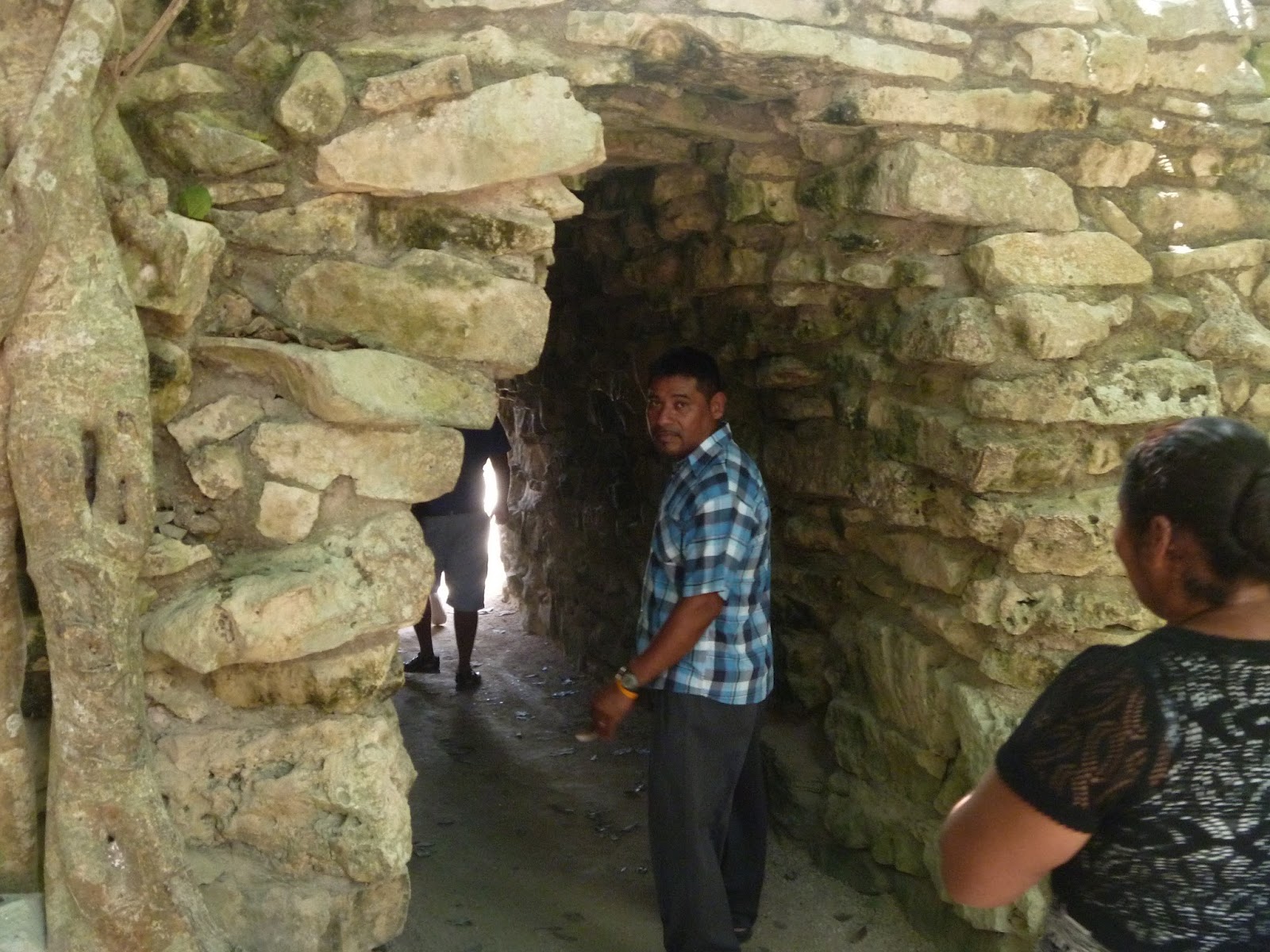
Julio & Janeth entering Tulum
Janeth & Julio at Tulum


Janeth & Julio cliffside at Tulum


On our last night, we went to La Botana in Chetumal for dinner.  Julio had a giant fish!

Thursday, September 22, 2016

Cohune Camping Casita Building Process

Some photos of the Cohune Camping Casitas going up. 

First, mix concrete for...

...the septic tank for the casitas, and...

...the footers.

Next, the platform base. 

Put down the floor and start the walls. 

Finish the framing and up goes the hip wall. 

Add a roof. 

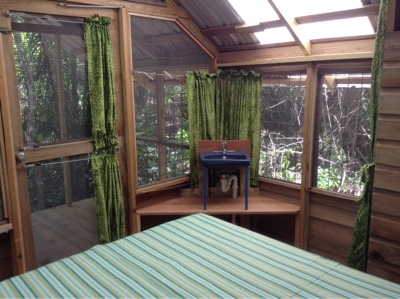
Screen and curtain the windows. 

Install a sink in the corner, 

And a toilet, and the associated plumbing.

Get the stairs on, and we are ready to go!


Our REAL summer Project: New Rooms!

Our big project this past summer has been building three new "rooms' which we are calling the Cohune Camping Casitas.  They are not luxury accommodations by any means, but at $35US/night for double occupancy, they are the only budget accommodations in or near the Mountain Pine Ridge.  

Each casita is a raised platform with a porch and a separate lockable room with a short wall, and screens and curtains all the way around.  You have the option of a queen bed or two twins, and each room has a toilet and sink in the room. A shared shower with hot water is available next to the guest kitchen.  The rooms are small and basic, with running water but no electricity, but they are clean, comfortable, and private. 

The view from the door from the porch into the bedroom

A toilet in each room

Side view of the camping casita...landscaping to follow!

I will do a separate blog entry of the building process, which is all Belize!


We didn't see who did this, but...

...we are very curious, in a catlike way.  


These are the tracks of some sort of wild cat who decided to take a peek in the guest cabin on a rainy night in July.  We still haven't washed them off because we want our guests to understand why when we tell them to latch their doors from the inside at night!

Saturday, September 17, 2016

The Zika Threat in Belize

Zika has now been declared endemic in parts of Belize, and it has been a much-discussed topic among our recent guests.  We take the threat of Zika very seriously, but don't necessarily think it means you need to cancel your Belize vacation, or a vacation to any other area where Zika is endemic. You should, however, be prepared to take precautions.  Use a lot of insect repellent. Plan not to get pregnant until you and your partner have both been tested for Zika after you return from your trip. And if you are pregnant, you probably shouldn't visit Belize.

The photo below shows the types of mosquitos that carry diseases.  I'm not sure how helpful it is since  you usually can't identify a mosquito until it stops flying to land on you and bite you, but it is interesting.  I also copied the CDC's advice on how to deal with Zika in Belize, which is more helpful.


Thursday, September 15, 2016

The thing about chickens...

Before we moved to Belize, I had a bunch of friends who were nuts about their chickens.  I didn't quite get it; I had horses (and still do), and I couldn't quite understand the big deal about noisy messy birds when you could have big beautiful horses.

In Belize, we quickly discovered that the only way to get good eggs is to know the chickens laying them.  The eggs you buy in the stores are crap; they're so mishandled, old, or from unhappy chickens, the yolks break as soon as you crack them, and they are sometimes spoiled when you buy them.  You quickly learn to always crack your eggs in a cup before using them.  For people who like easy over eggs in the morning, this just doesn't do.

We found a friend down the road who sold eggs.  Her chickens were well loved, well fed, free range and happy.  The eggs were great.  But, the chickens got old, and she no longer sold eggs.  So, we decided that in the interests of self-sufficiency we would get chickens.

The first batch were the red laying hens.  We have an open coop where we can keep them at night, and they free range during the day.  We bought them as little chicks, and they were laying within about four months.  The eggs were perfect.  However, one of the first things we learned about chickens is that disaster is always imminent, and there are lots of ways to kill a chicken...foxes, hawks, boas, possums, dogs (even ours!), and horses (also ours!).  The lesson was to not get to attached to chickens, which is fairly easy to do since they all the red hens look and act the same.

This lesson made us brave, and we decided to start getting broilers.  We also bought these as little chicks, and within six or eight weeks they are five to seven pounds and ready to be butchered.  I learned to butcher them, and found that I didn't have a problem doing it.  The broilers are pretty dull, tend not to wander around even when you leave the coop open, and the transition from live chicken to meat really isn't all that drastic.  Living off grid, we have a very small refrigerator and freezer, so keeping them alive and making the first step of a chicken dinner "butcher the chicken" works pretty well.

Just this spring, we got brave and decided to get local chickens.  The hens won't lay as many eggs as the red hens, and the eggs will probably be smaller, but they lay for a longer time.  The roosters won't grow as fast as the broilers, but local chicken meat is very tasty, moreso than the broiler meat, because the roosters will free range.  We thought since we'd done the starter chicken thing with the red hens and the broilers that we were ready for "real" chickens.


We were wrong.  In the middle of May, we bought 25 3-week old local chicks.  I think we now have 25 pet chickens, and I now understand how all my NY chicken friends got so attached to their chickens.  The local chickens are individuals, which I think is what makes them so engaging.  They are all different colors, all different sizes, all different shapes, and they all have different personalities.  Watching them grow over the past few months has been fascinating and Tom and I even found ourselves taking our evening beers to the chicken coop just to watch them.  

Getting attached isn't a problem for the hens, who should be laying eggs for us for the next five years or so.  The roosters, however, are another story.  They're not really good for much besides doing their part to create the next generation of chickens, entertainment, and...meat.  And I don't want to butcher any of them because they are pretty and entertaining and funny.  I'm using the excuse that I want to see what the next generation looks like before we start eating potentially good fathers, but really, I just like them.  


The problem is that they crow.  I find this fascinating, because they each have a different voice and different crowing postures and different attitudes.  But they start at around 4am.  They spend the night in their coop, which is far enough from the house that they don't wake me up, but if I am awake for some reason, it's loud enough to keep me awake.  And Tom says they do wake him up, so we are worried that they will eventually bother some of our guests, although so far nobody has complained.  I figure there are enough loud noises in the jungle at night, like the howler monkeys and disturbed chachalacas, that we should be able to ignore it, but I suspect I am just rationalizing my lack of desire to butcher them.

So what's the conclusion?  I don't know.  For now, the roosters are getting a pass.  However, it's possible that we will eventually get hungry enough or annoyed enough or just overwhelmed with roosters enough that we will start eating them.  I'm sure they will be delicious.

Tuesday, September 13, 2016

The end of the dry season is fire season

This year's dry season ran from the beginning of March until the second week in June.  After three months of almost no rain, even the jungle was very, very dry. 

The thing with fire and the dry season is that the best way to protect your property from fire is to burn everything that could possibly accidentally catch fire. So, we raked and burned our property lines and paths both to get rid of some of the tinder, and to create firebreaks. This works well, in theory, until a breeze kicks up when the fire isn't totally out. 

That's what happened with the fire in these pictures, which is on our water tank hill.  We had burned the path from our house up to the water tanks to protect the PVC water line, and the next afternoon we smelled smoke and heard popping.  We ran up the hill with our machetes, and found that the fire had spread around the top of the hill.  We put out the edges and stopped it from spreading, but it added a bit of excitement to our afternoon. 


Adorable varmints

One night, I heard a kerfluffle in the dog yard, and went outside to find Kismet with a very cute four-eyed opossum in her mouth.  The possum was wet, but otherwise unharmed.

I briefly heard Julio's voice in my head telling me to kill it, since they get in the kitchen and make a mess, and their larger cousins will kill chickens...but I couldn't do it.  I put it over the top of the fence, where it crawled down to touch noses with Kiss, although I really think the nose kiss was Kiss initiated, and completely unintended on the part of the possum.


Look at those adorable little hands!


Summer project #1: guest kitchen and shared shower

Over the past few years, we have had more and more guests traveling on a budget and looking for alternatives to our meal plan.  While our meals are very reasonably priced compared to the resorts around us, and even compared to US food prices, at $30US/day/person, it still adds up, especially when our guests are traveling with family.  We tried lowering our food prices a couple of summers ago, and found that we were losing money, so we put the prices back where they had been, and decided to build a kitchen so guests could cook for themselves if they wished.

We are committed to the philosophy of reusing and recycling, so rather than build a new kitchen from scratch, we repurposed and rebuilt one of the old jaguar cage dens and turned it into a kitchenette and shower to be shared with the new camping casitas.  The following photos show some of the steps of this process, which has taken us most of the summer.

The first step was to put a roof on the structure, so Tom and Julio pulled some sticks out of the jungle and stripped the bark from them.

They built the roof structure and prepared it for the zinc.

Julio always does the off the ground work!

The roof is open ended, to keep it cool.  We are leaving the cage material as one wall to help with this as well, so it really feels like an outdoor kitchen.

We moved in the stove, and Tom and Julio built a screened cabinet under the counter for food storage so the varmints can't get our guests' food.

Add a sink and another counter, and we are ready to cook!  We do not have electricity and are not purchasing another butane fridge for occasional use, but we will provide a cooler so guests can get ice and keep their perishables cool.

The shared shower will be on the other side, completely enclosed...photos to follow.


Moving lumber; this is how we do it

Our neighbor had to cut down an enormous ceiba tree because it was leaning towards the house.  The felling of the tree was quit dramatic, but even more interesting was how the Mennonite loggers moved the wood form our neighbor's property to their sawmill.


A brilliant yellow cascade

Every year, at the end of April or beginning of May, this gigantic orchid blooms near Tom's shop.  We have others around the property, but this is by far the most impressive. 


Ever hold a hummingbird?

We are finally in a place with decent bandwidth where I have time to do some catching up (well, a lot of catching up!) on the blog.

This photo is from the beginning of April, when we heard peeping in the heliconias, and found a baby hummingbird who could fly enough to get out of its nest, but not to get back in.  Mama was having a fit because other hummingbirds were attacking it, so Tom picked it up and put it on a higher branch.