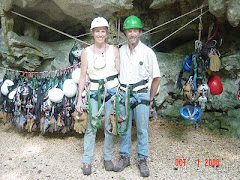
Yeah, I know this is just an ad. But they are really cool and make our life a lot easier.
Tuesday, August 22, 2017
Another thing we like...solar lights!
4 PACK INFLATABLE SOLAR LIGHT, RECHARGEABLE WATERFROOF SOLAR LED LANTERN LIGHT GREAT FOR CAMPING HIKING BIKING FISHING HUNTING PICNIC PATIO SURVIVAL EMERGENCY by Elite Supplies https://www.amazon.com/dp/B018HFXCIQ/ref=cm_sw_r_cp_tai_Q9oNzbF8NQRPF


Wednesday, July 26, 2017
Purified water by Sawyer Products!
Living here in Belize is a bit rustic. We are off-grid with no public electric, satellite
internet, and water from a “rudimentary water supply” – meaning water from about
8 miles of PVC pipe from a clean river up in the Mountain Pine Ridge. The water is not potable from the system so
we use a water filter made by Sawyer Products, Inc. (www.sawyer.com).
About 6 years ago we switched from buying and
hauling all of our drinking water to using a Sawyer water filter system that
Rotary International was providing to people living in the area of El
Progresso, Cayo District, Belize. This
eliminated the costs for purchasing potable water and also the costs associated
with hauling. We filter the water that
we get from the public water system and also rain water that is stored in 1,000
gallon tanks. Guests that visit us at
our small jungle resort, Moonracer Farm, have been very pleased with the water
and no one has gotten sick.
Our original filter was slowing down after using
it for so many years so we got another filter to reduce the time to fill our
drinking water jugs. We have been very
pleased with the filters and highly recommend them.
Thanks, Sawyer Products, for manufacturing a
quality product that helps keep us and
our guests healthy!

Friday, July 7, 2017
Check out his blog!
We spent a couple of evenings with Hana and Mark during their time in this area, and even got mentioned in their blog...with a photo! If you want to be part of a really cool adventure, start following this blog: http://www.highlux.co.nz/2017/07/belize-san-ignacio-hopkins/
Wednesday, June 28, 2017


Thursday, May 25, 2017
Davis Falls, Stann Creek, Belize


From the reports we read, we expected the eight mile off-road drive through orange orchards and jungle and across at least six creeks to be a challenge, so Tom made sure we were prepared with a come-along, tow chains and straps, bridge boards, and shovels. As it turned out, we didn't need any of those things, and only put the truck into 4WD twice, and one of those times was because we stopped in the middle of a very steep hill to look at a bird and our little Isuzu needed 4WD-Low just for the power to get started up the steep hill. The track was mostly well-maintained orchard roads, and the stream crossings were all very shallow and well paved with stationary river rocks. However - and this is a big "however" if you are intending to make the trek - we did it at the end of the dry season on a sunny day, and the roads were very dry and the creek was very low. In the rainy season when the water is high the creek crossings could be a little nerve wracking, and we noticed some spots on the track that looked like they could very easily become impassable mud bogs. Some of the hills out of the creek crossings were also pretty steep, and looked like they could become very slick if wet, which would make climbing them almost impossible without 4WD and good tires. And, there were a few spots where deep ruts ran down the track, which we were able to straddle, but which would be very easy to slide into if the track was muddy. The eight miles took us about a half hour, although we stopped slightly short of the ranger station because of a mud bog and ditch that didn't seem worth attempting since the ranger station and trail head were only a five-minute walk. Overall, we were pleasantly surprised with the good condition of the track.
We were less pleasantly surprised with the walking access to the Falls, and that became our adventure for the day. We had read and heard that from the ranger station it was about a half hour walk on a trail. Even the men at the little store by the turnoff on the Hummingbird Highway said it was just a half hour walk from the ranger station. We found the trail head and started walking, and within about 200 yards the trail ended at the creek. We back tracked and looked for the trail, and still couldn't find it, and decided we would just follow the creek to the base of the Falls. The creek, at least this time of the year, is mostly very shallow, and very beautiful as it flows over small waterfalls created by all the big rocks in the creek bed. Hiking up the creek bed should not have been a big deal...if we hadn't been toting a 30 pound blind dog!
 We had decided in advance that this would be a good outing for the dogs. Kismet and Jalis love to hike, and we have been walking Reddy on the road with them for four miles every day, and she trots along and does great. So, we didn't think walking her on a trail to the waterfall would be any big deal, and it wasn't, until we got to the creek. There, the poor thing had no idea how to climb over the rocks, and she was very scared of falling in the water. We started out letting her walk and very slowly guiding her, but soon realized that it would have probably taken us days to make our way up the mile or so of creek at her pace. Tom and I started taking turns carrying her, but it was exhausting, and very difficult to climb and walk on slippery rocks with 30 pounds of dog wriggling in your arms. We tried emptying one of our packs and making a dog carrier for Tom to carry on his back, but every time he bent over to climb on something, she tried to climb out of the pack. In the end, we just took our time and let her walk where we could, carried her where we had to, and took a lot of rests. It took us about an hour and a half to get to the base of the falls, but we made it and it was well worth the effort.
  Davis Falls is absolutely gorgeous. The creek flows over a rock cliff about 500 feet down into a pool surrounded by large boulders, and then continues flowing through the large boulders to another larger, deeper pool. A flat rock by the big pool made a great picnic spot, and the pool was a perfect swimming hole after we made the effort, without Reddy, to go the last little bit to the base of the falls. We even looked for the other end of the trail near the base, but couldn't find anything from that side either. So, we swam and snacked and enjoyed watching the dogs in one of the most beautiful places on earth. As it turns out, Reddy is a pretty good swimmer, and she swam with Tom in the big pool. Kismet loves the water, and was swimming, climbing, and jumping from rock to rock, and generally having a grand time. Shortly before we arrived at the big pool, there was a spot in the creek where there were no rocks to cross, and while all of us humans had decided way before we got there that wet boots were a small price to pay for ease of passage, Jalis decided that he wasn't going to get his feet wet and wasn't going any further. He put himself on a rock, used his camouflage to blend in, and gave us the stink eye for leaving him behind. If you zoom in right at the center of this photo and look just to the left of the big rock, you can see him.
We made it out as easily as we drove in, and stopped at the little store to let them know we had returned safely. A young man who sometimes guides people to the Falls was in the store, and he said that there is a trail, but it is hard to find, and most people end up doing what we did and going up the creek. If we do the trip again, we won't take Reddy, and we may hire a guide to show us how to get to the trail.
We drove home along the beautiful Hummingbird Highway and got a wonderful view of the day's gorgeous sunset. We pulled into Belmopan around 6:30pm, and Tatiana treated us to a delicious dinner and Belikins at Corkers. We were all pooped, but it was a fantastic day out finding another one of Belize's natural wonders.

Monday, May 22, 2017
Pineapples: Domestic vs. Wild
Remember the photo of the baby pineapple with purple flowers? The first photo here is of a baby *wild* pineapple, also with purple flowers. Besides the purple flowers and spikey leaves, the domestic and wild don't look very similar. The last photo is the same domestic pineapple today, about six weeks later.


Tuesday, May 16, 2017
Bee Homes
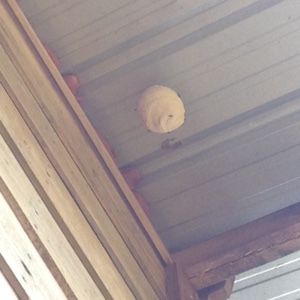
At this point in the dry season, lots of flowers are blooming and we hear a constant background buzz of bees. So, we weren't surprised when Julio took us on a bees' nests tour and we found four different types of nests right in the yard.


Monday, May 1, 2017
It's the dry season...
Forget the 17-year cicada thing. Here in Belize, every dry season is cicada season, to the point where every night when we sit with our guests in the early evening, the first question is, "What is that noise?" in response to the loud saw-like buzzing that sometimes causes us to raise our voices in order to be heard. The cicadas are big, and there are a lot of them. The photo of the shells on the tree is just a small patch of the tree trunk, and most of the tree is covered with this density of shells.


Saturday, April 22, 2017
A visitor
The hummingbirds were making a fuss in the tangerine tree outside the dining palapa, so I went to see what was bothering them, expecting a snake. Instead, it was this tiny Ferruginous Pygmy-Owl.


Monday, April 10, 2017
Baby pineapples have...
...flowers!

I never knew baby pineapples had pretty little purple flowers until I took a look at this one growing outside my kitchen.
Monday, April 3, 2017
Not the usual wasp nest
We sat down to lunch yesterday, wondering what this ball of ceiba fluff was doing on the table. Our question was soon answered when this wasp showed up carrying a small ball to add to the pile, and then crawled into the nest.
#belizenature #belizeecolodge


Friday, March 31, 2017
Snake & Ground Dove
I was baking brownies in my open kitchen and heard a fluttering in the bush. Upon investigating, I found this snake had caught a Ruddy Ground Dove by the neck, and as I watched it proceeded to try to eat it, head first. The bird must have been too big, because after no progress for a considerable time, the snake dropped the body of the bird and disappeared into the trees.
#belizewildlife

Monday, March 20, 2017
We really are pet friendly. Ask Leo!
Here's Leo, a Welsh Terrier from London on an overland expedition from Alaska to Antarctica with his people Monica and Jake, to tell you that Moonracer really is pet friendly. We even trade sausages for tricks!
#petfriendly #belizeecolodge

Wednesday, March 15, 2017
The Annual Cortes Tree Photo
We are on the middle day of the three days a year when our spectacular Cortes tree blooms. This is our 11th Cortes photo, and I think the first one where the sky behind it hasn't been blue...but we are not complaining about a little extra rain as we head into the dry season.
#MoonracerFarm

Sunday, March 12, 2017
Welcome Red!
Introducing Red, the newest Moonracer misfit! She came to us via the Belmopan Humane Society, who rescued her after she was abandoned when her owner was killed last summer. She is mostly blind and will need surgery on her eyes, but she is sweet as can be, super cute, and oh so soft and lovable. She gets along great with Jalis and Kiss, enjoys our 4-mile walks every day, and is pictured here studying Zana the cat, mostly with her nose...which hasn't yet been scratched by the sharp and pointy. 
Monday, March 6, 2017
Lots of Hummingbirds!
Our most recent adventure was hanging hummingbird feeders in our dining palapa, at the recommendation of almost all of the many birders who have visited over the last few months. They have been an astounding success, and we have, to date, recorded 8 different types of hummingbirds. They are fearless little creatures, and are fascinating to watch up close.
#BelizeBirds #belizeecolodge

Sunday, February 19, 2017
National Flower of Belize
Right here, right now, the black orchid, national flower of Belize, blooming in our yard.
#nationalflowerofbelize #belizeecolodge

Wednesday, February 15, 2017
An Old Corner
Julio and Tom have been trying to flatten a dirt area for more parking. They found one dirt bump that refused to be flattened, so Julio went at it with a pick ax, assuming it was a rock under the ground. As he chipped off the top layer, he realized that the bump was made of dry laid stones at right angles, probably the corner of a Maya structure buried over the years. We have found a number of artifacts in that area, so this was not too much of a surprise, but still interesting.
#backyardarcheology #remotejunglelodge #MoonracerFarm

Sunday, February 12, 2017
A beautiful visitor
This beauty dropped in for a visit the other day. We are not sure if the chicks were the attraction, but once we and our guests crowded around with cameras, the snake retreated to the tops of the trees and made its way back towards the jungle. I was hoping it would stop and clean the varmints out of the thatch on my kitchen, but it disappeared.
#belizewildlife

Wednesday, February 1, 2017
Birders Welcome!
Saturday night, we were lucky to host a birding group here at Moonracer Farm. This first Birding Big Day covered the Mountain Pine Ridge, and we are the perfect staging area. Roni Martinez described the Big Day, as well as supplying the following photos:


The first of 12 Birding Big Days to cover Belize in 2017. Our 15 participants were from all over the country. Orange Walk, Belize, Cayo and Stann Creek Districts. Plus from Peten Guatemala. 105 species in 11 hours of intense Birding. Including: Chestnut-collared Swift, Stygian Owl, Orange-breasted Falcon, Cabanis's Wren, Barred Forest-Falcon, White-winged Tanager, Stripe-tailed Hummingbird, Lovely Cotinga and Ornate Hawk-Eagle. Thanks to the Belize Audubon Society for inviting past Bird Guide students and helping with logistics.
It was great fun to sit in the background and listen to a group of people who are passionate about what they are doing. Besides learning a lot about the local birds, we were inspired by the energy of the group. We hope to see more of everyone in this group in the future!
Friday, January 27, 2017
Clearing the Property Lines
Every year about this time, as the rainy season wanes and the dry season approaches, we realize we need to clean our property lines. A few of our lines border farm fields, and we have learned the hard way that after the farmers harvest their crops, they burn the fields, and if our lines aren't cleared during the dry season, the fires will run on to our property. It is hard work with lots of dead fall, especially after a year with a hurricane, as well as very tall and sharp grass. But, a chance wildlife encounter with a boa, as well as the peace of mind that we won't be battling a forest fire in a few months, makes it well worth it.
 |
| Property line, before clearing, with the farm field to the left. |
 |
| Clearing part way through the tall grass. That's Julio at the end with the grass over his head! |
 |
| Boa in the grass |
 |
| Boa being safely relocated, jungle side |
 |
| Cleared property line looking the other way |
Wednesday, January 18, 2017
Natural Ornamentals
We are planting local ornamentals around the casitas, and to keep the jungle feel real, Julio went into the jungle to see what he could find growing there naturally. Among a whole pack of beautiful plants were these two orchids.
#belizeorchids #belizeecolodge #MoonracerFarm


Sunday, January 15, 2017
San Ignacio - San Antonio bus schedule
Updated February 28, 2017
Buses between San Antonio and San Ignacio run Monday through Saturday. No buses on Sunday.
Depart San Antonio to go to San Ignacio
5:15am
6:00am
7:00am
8:30am
12:30pm
1:00pm
1:15pm
4:00pm
Depart San Ignacio to go to San Antonio
9:40am*
10:30am
11:30am
1:15pm*
3:15pm*
4:30pm
5:30pm
6:20pm*
* These are Mesh Line buses, and depart from the parking lot next to Western Dairies rather than the bus stop in the park
* These are Mesh Line buses, and depart from the parking lot next to Western Dairies rather than the bus stop in the park
#belizejunglelodge #busschedule #MoonracerFarm
Saturday, January 14, 2017
Pizza & Jaguars
Dr. Marcella Kelly of Virginia Tech and her team of jaguar researchers joined us for a pizza party and presented an overview of their research in the Mountain Pine Ridge to our guests. The jaguar researchers loved the pizza, and our guests loved both the pizza and the presentation, and we all had a great time.
#MoonracerFarm #ecolodge #wildlifeconservation

Friday, January 6, 2017
Another Anole
When Julio yells for me to grab a camera, I don't even ask what he sees, I just get a camera and run. This morning it was this beautiful green lizard, which we have tentatively identified as a Neotropical Green Anole based on the Julian Lee book. The book says they are uncommon, which they may be...or maybe we just don't see them.
#belizenature #travelbelize #BelizeJungleLodge #MoonracerFarm


Monday, January 2, 2017
MRF is an ebird hotspot!
We've been a hotspot on ebird since May, but with H. Lee Jones' recent visit, we have jumped to a yellow balloon with 153 species. Not surprising, with Green Hills Butterfly Ranch and Mountain Equestrian Trails, both major birding hotspots in Cayo, just a mile down the road, and we hope that more birders will visit us and expand our list!
http://ebird.org/ebird/hotspot/L4608376
#ebird #MoonracerFarm #RemoteJungleLodge #BelizeTravel
Sunday, December 18, 2016
Paths and Progress
All roads lead to Moonracer Farm! Our efforts over the past couple of weeks have been to improve our entrance, parking areas, and paths. We added flowers under our sign, parking pads for guest vehicles, and a clear winding path through the jungle to the Cohune Camping Casitas.
#MoonracerFarm #BelizeJungleLodge


Tuesday, December 13, 2016
Hummer Rescue
i heard a buzzing sound and looked up to see this poor little hummingbird with his bill stuck in the screen. I quickly snapped a photo, then gently pushed his bill back through the screen. He cheeped his thanks, I tickled his feet, and off he flew.
#belizenature #MoonracerFarm


Subscribe to:
Posts (Atom)