Thursday, September 15, 2016

The thing about chickens...

Before we moved to Belize, I had a bunch of friends who were nuts about their chickens.  I didn't quite get it; I had horses (and still do), and I couldn't quite understand the big deal about noisy messy birds when you could have big beautiful horses.

In Belize, we quickly discovered that the only way to get good eggs is to know the chickens laying them.  The eggs you buy in the stores are crap; they're so mishandled, old, or from unhappy chickens, the yolks break as soon as you crack them, and they are sometimes spoiled when you buy them.  You quickly learn to always crack your eggs in a cup before using them.  For people who like easy over eggs in the morning, this just doesn't do.

We found a friend down the road who sold eggs.  Her chickens were well loved, well fed, free range and happy.  The eggs were great.  But, the chickens got old, and she no longer sold eggs.  So, we decided that in the interests of self-sufficiency we would get chickens.

The first batch were the red laying hens.  We have an open coop where we can keep them at night, and they free range during the day.  We bought them as little chicks, and they were laying within about four months.  The eggs were perfect.  However, one of the first things we learned about chickens is that disaster is always imminent, and there are lots of ways to kill a chicken...foxes, hawks, boas, possums, dogs (even ours!), and horses (also ours!).  The lesson was to not get to attached to chickens, which is fairly easy to do since they all the red hens look and act the same.

This lesson made us brave, and we decided to start getting broilers.  We also bought these as little chicks, and within six or eight weeks they are five to seven pounds and ready to be butchered.  I learned to butcher them, and found that I didn't have a problem doing it.  The broilers are pretty dull, tend not to wander around even when you leave the coop open, and the transition from live chicken to meat really isn't all that drastic.  Living off grid, we have a very small refrigerator and freezer, so keeping them alive and making the first step of a chicken dinner "butcher the chicken" works pretty well.

Just this spring, we got brave and decided to get local chickens.  The hens won't lay as many eggs as the red hens, and the eggs will probably be smaller, but they lay for a longer time.  The roosters won't grow as fast as the broilers, but local chicken meat is very tasty, moreso than the broiler meat, because the roosters will free range.  We thought since we'd done the starter chicken thing with the red hens and the broilers that we were ready for "real" chickens.


We were wrong.  In the middle of May, we bought 25 3-week old local chicks.  I think we now have 25 pet chickens, and I now understand how all my NY chicken friends got so attached to their chickens.  The local chickens are individuals, which I think is what makes them so engaging.  They are all different colors, all different sizes, all different shapes, and they all have different personalities.  Watching them grow over the past few months has been fascinating and Tom and I even found ourselves taking our evening beers to the chicken coop just to watch them.  

Getting attached isn't a problem for the hens, who should be laying eggs for us for the next five years or so.  The roosters, however, are another story.  They're not really good for much besides doing their part to create the next generation of chickens, entertainment, and...meat.  And I don't want to butcher any of them because they are pretty and entertaining and funny.  I'm using the excuse that I want to see what the next generation looks like before we start eating potentially good fathers, but really, I just like them.  


The problem is that they crow.  I find this fascinating, because they each have a different voice and different crowing postures and different attitudes.  But they start at around 4am.  They spend the night in their coop, which is far enough from the house that they don't wake me up, but if I am awake for some reason, it's loud enough to keep me awake.  And Tom says they do wake him up, so we are worried that they will eventually bother some of our guests, although so far nobody has complained.  I figure there are enough loud noises in the jungle at night, like the howler monkeys and disturbed chachalacas, that we should be able to ignore it, but I suspect I am just rationalizing my lack of desire to butcher them.

So what's the conclusion?  I don't know.  For now, the roosters are getting a pass.  However, it's possible that we will eventually get hungry enough or annoyed enough or just overwhelmed with roosters enough that we will start eating them.  I'm sure they will be delicious.

Tuesday, September 13, 2016

The end of the dry season is fire season

This year's dry season ran from the beginning of March until the second week in June.  After three months of almost no rain, even the jungle was very, very dry. 

The thing with fire and the dry season is that the best way to protect your property from fire is to burn everything that could possibly accidentally catch fire. So, we raked and burned our property lines and paths both to get rid of some of the tinder, and to create firebreaks. This works well, in theory, until a breeze kicks up when the fire isn't totally out. 

That's what happened with the fire in these pictures, which is on our water tank hill.  We had burned the path from our house up to the water tanks to protect the PVC water line, and the next afternoon we smelled smoke and heard popping.  We ran up the hill with our machetes, and found that the fire had spread around the top of the hill.  We put out the edges and stopped it from spreading, but it added a bit of excitement to our afternoon. 


Adorable varmints

One night, I heard a kerfluffle in the dog yard, and went outside to find Kismet with a very cute four-eyed opossum in her mouth.  The possum was wet, but otherwise unharmed.

I briefly heard Julio's voice in my head telling me to kill it, since they get in the kitchen and make a mess, and their larger cousins will kill chickens...but I couldn't do it.  I put it over the top of the fence, where it crawled down to touch noses with Kiss, although I really think the nose kiss was Kiss initiated, and completely unintended on the part of the possum.


Look at those adorable little hands!


Summer project #1: guest kitchen and shared shower

Over the past few years, we have had more and more guests traveling on a budget and looking for alternatives to our meal plan.  While our meals are very reasonably priced compared to the resorts around us, and even compared to US food prices, at $30US/day/person, it still adds up, especially when our guests are traveling with family.  We tried lowering our food prices a couple of summers ago, and found that we were losing money, so we put the prices back where they had been, and decided to build a kitchen so guests could cook for themselves if they wished.

We are committed to the philosophy of reusing and recycling, so rather than build a new kitchen from scratch, we repurposed and rebuilt one of the old jaguar cage dens and turned it into a kitchenette and shower to be shared with the new camping casitas.  The following photos show some of the steps of this process, which has taken us most of the summer.

The first step was to put a roof on the structure, so Tom and Julio pulled some sticks out of the jungle and stripped the bark from them.

They built the roof structure and prepared it for the zinc.

Julio always does the off the ground work!

The roof is open ended, to keep it cool.  We are leaving the cage material as one wall to help with this as well, so it really feels like an outdoor kitchen.

We moved in the stove, and Tom and Julio built a screened cabinet under the counter for food storage so the varmints can't get our guests' food.

Add a sink and another counter, and we are ready to cook!  We do not have electricity and are not purchasing another butane fridge for occasional use, but we will provide a cooler so guests can get ice and keep their perishables cool.

The shared shower will be on the other side, completely enclosed...photos to follow.


Moving lumber; this is how we do it

Our neighbor had to cut down an enormous ceiba tree because it was leaning towards the house.  The felling of the tree was quit dramatic, but even more interesting was how the Mennonite loggers moved the wood form our neighbor's property to their sawmill.


A brilliant yellow cascade

Every year, at the end of April or beginning of May, this gigantic orchid blooms near Tom's shop.  We have others around the property, but this is by far the most impressive. 


Ever hold a hummingbird?

We are finally in a place with decent bandwidth where I have time to do some catching up (well, a lot of catching up!) on the blog.

This photo is from the beginning of April, when we heard peeping in the heliconias, and found a baby hummingbird who could fly enough to get out of its nest, but not to get back in.  Mama was having a fit because other hummingbirds were attacking it, so Tom picked it up and put it on a higher branch.


Wednesday, March 30, 2016

Look Up!

I'm a little embarrassed to admit that when I was running around the farm this morning taking pictures of flowers, I never looked up to see that our Cortes tree was in its once-a-year state of beauty. We now have nine of these photos, and find its beauty breathtaking every year. 


Hot + Dry = Flowers?!?

In the north, we associate flowers with spring. Here, they bloom when it gets hot and dry. These photos were all taken this morning on the grounds of Moonracer Farm. 


Thursday, March 10, 2016

The Gibnut Roundup

A couple of years after we moved to Moonracer Farm, we were given four gibnuts, also known as pacas, to keep in one of cages on the property. The original idea was that we would breed them - there were three females and a male - and the babies could of be used for future breeding stock or, if we had a surplus, for meat, thinking that if people could buy the meat perhaps it would help with the overhunting of the species that is a problem here in Belize. 

A couple of years after we got them, we had three babies.  Unlike many rodents, gibnuts only have one or two babies at a time, and they grow very slowly, not reaching adulthood for a year or more.  Then the original male died, but we thought one of the babies was a male, so we just left them in the cage, hoping we would have more babies when the first batch matured.  They were mature three or four years ago, and we never had any more babies.  

The Belize Zoo has now decided that a captive breeding program is a good idea since the wild gibnut population is dwindling due to overhunting, and they were gifted with a young female found by someone in one of the villages along the Hummingbird Highway.  Sharon Matola, director of the Belize Zoo, knew of our gibnuts and asked if we would be willing to donate any of them, especially a male, for this project.  Since their goals are the same as our goals, we were delighted to try to help.

Sharon and Berto came out to Moonracer a couple of weeks ago to meet our pack of pacas, and to drop off animal carriers and discuss a strategy to get gibnuts from Moonracer to the Zoo. Since our original females are now pretty old, probably past breeding age, we decided that we would keep them and send the younger ones off to the Zoo, especially Munchkin, the one we thought was a male.  We put the animal carriers in the gibnut cage with the doors open, and I started feeding them in the cages.  Being relatively tame already, they very quickly started going in the carriers to get food, so I contacted Sharon and Berto and arranged a drop off day at the Zoo, which was just two days ago.

On Tuesday morning, I went out to feed them like normal, but with Tom along as well.  This wasn't strange to the gibnuts, because although I usually do the day to day care, when our guests want to see them, Tom is usually the one to take the guests into the cage, and he gives them treats.  We positioned ourselves near the carriers, and I put some especially tasty morsels into the carriers. The gibnuts didn't come out immediately, but within about five minutes Scarfy, one of the old females, and then Munchkin, came out of their holes and started taking food from the carriers.  

We stayed still and let them nibble their way into two different carriers.  Munchkin was closer to me, and when he had three legs in, Tom said "Now!"  I slammed the door, and he exploded.  Gibnuts can move very fast, and he was not happy.  Scarfy disappeared back into one of her holes.  We waited a few minutes to let Munchkin calm down and see if any of the others would come out, but although Minchie did get calm, the others were spooked and we didn't see them again.

We loaded the crate in the back of the pickup, and headed for the Zoo.  

Munchie was growling every time we checked on him, but seemed okay.  When we got to the Zoo, Berto and Tim took the carrier to Munchie's new home, nicknamed the honeymoon suite since he would be sharing it with Cuddles, the young female.  The enclosure, not in the public part of the Zoo, was divided so the two gibnuts could get to know each other without fighting.  Munchie was happy to get out of the carrier and explore the new enclosure.


Then came the bad news - Berto, who knows more about gibnuts than Tom or I, said he is pretty sure Munchie is a female!  Oh no!  But, we talked about it, and talked with Sharon, and decided that we would leave her there anyway as part of the program, and still try to catch the other two, who Tom and I are pretty sure are females.  That would explain why we never had any babies after the male died.

Before we left the backside of the Zoo, Berto and Tim took us to meet Cuddles, and let us hold her.  


That was a great, because we have intentionally not handled ours...we don't want them to be too easy to catch if we ever forget and leave the door unlocked.  We were both surprised by how solid Cuddles is, and how bristly her coat is.  She didn't seem to mind being held, but after a few good rubs we put her down and went with Berto to enjoy a delicious lunch at the Zoo's cafe. 

Our next step is to catch the other youngsters, which could take a bit of effort since they are not as friendly as Munchie.  But we will try!


Monday, March 7, 2016

Back to caving


After a two year break working on a conservation project in the Mountain Pine Ridge, a few more months helping family in the US, and then another couple of months getting settled, we are back up and running at Moonracer Farm!  In our absence, the place was beautifully run by Julio and Janeth, but we are looking forward to getting our own hands dirty and rebuilding the business, which slowed down because we weren’t paying attention to promoting it in Belize’s changing tourism industry.

Speaking of getting our hands dirty, we took some time out yesterday to explore a local cave which neither we nor the property owner had ever investigated beyond the entrance room.  Access to the cave has been difficult in the past, with ladders and ropes necessary to get from the rock opening to the floor of the entrance room.  The property owner has just recently taken the time (perfect for our return!) to create a ladder/stair structure that makes it relatively easy to get into the cave.  So, we decided to go exploring.

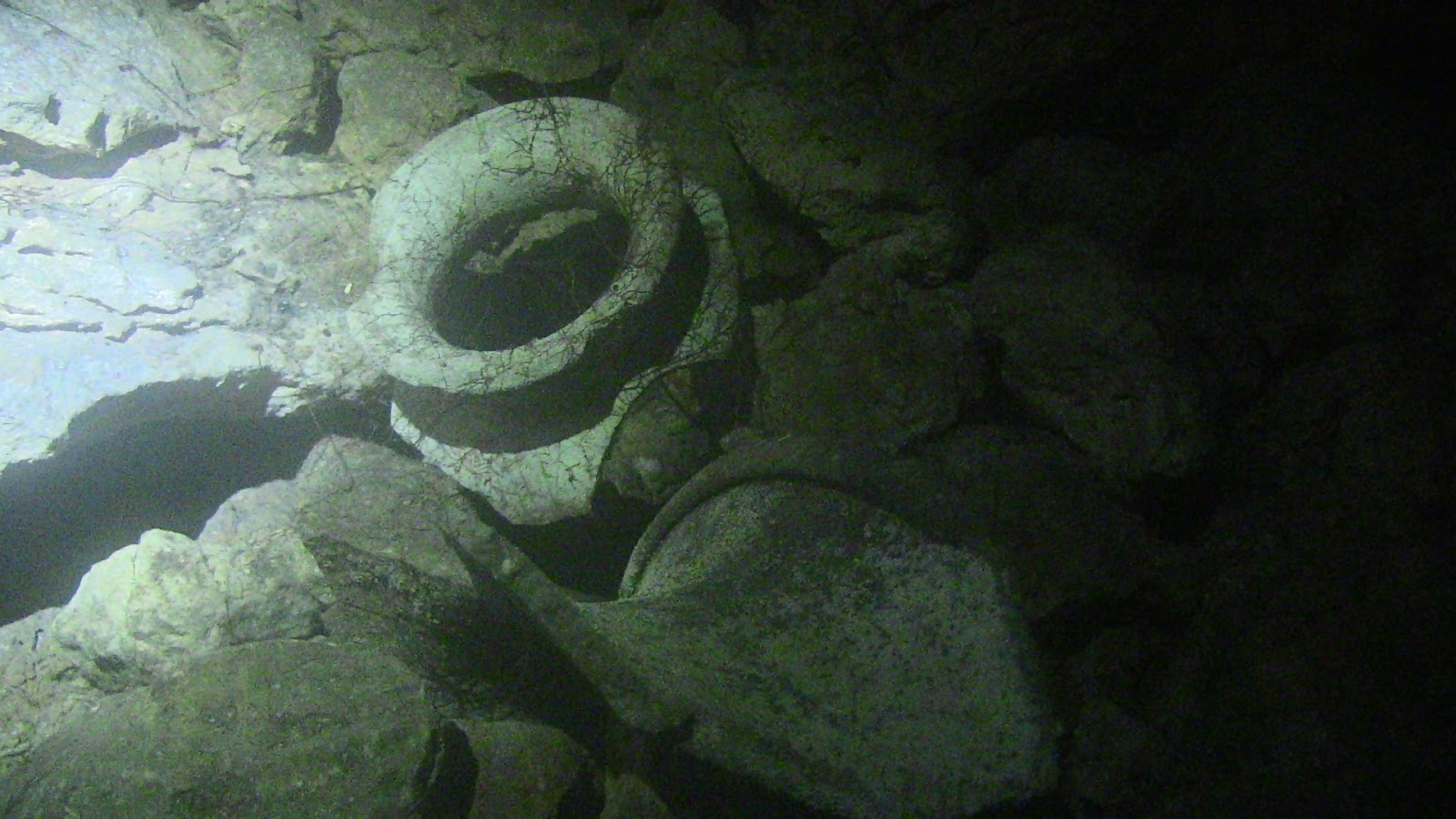
We only explored a small fraction of what we believe lies in the Maya underworld inside this cave, but what we saw was impressive.  Like most caves in Belize, pot sherds are everywhere, and some are parts of what must have been very large pots. 


The rock formations are stunning, and at points the entire cave sparkled in the light of our headlamps. 


 The cave is also home to lots of bats, who mostly hung out on the walls, but would occasionally take flight and flutter through the very large rooms of the cave.


The parts of the cave we explored were very large and open rooms.  While we had to scramble over rocks, slide down a few dirt and mud slides, and occasionally duck through a small tunnel, it was pretty easy going where we went.  However, we decided to save one large cavern for another day, and we peeked down plenty of cracks and smaller holes that undoubtedly lead to more rooms, and decided to save them for another day as well.  We have heard of experienced cavers getting lost in this cave, and while we have enough experience to know to do things like wear hardhats, carry water and extra batteries, and mark where we are going, we are going to do a little more planning before venturing further into this underworld adventure.  It’s just one more thing to add to our very long Belize Adventure To-Do list.